Blog

Journal

Release notes, field reports, and research commentary from the vLLM Semantic Router project.

4 posts tagged with "routing"

View All Tags

Adding Cursor-Style Auto Model Selection to OpenCode with vLLM Semantic Router

· 11 min read
Anup Sharma
AI & Distributed System @ Nutanix
Aayush Saini
SDE, Data and AI @ Red Hat
Shivji Kumar Jha
Staff Engineer (Data & AI) @ Nutanix

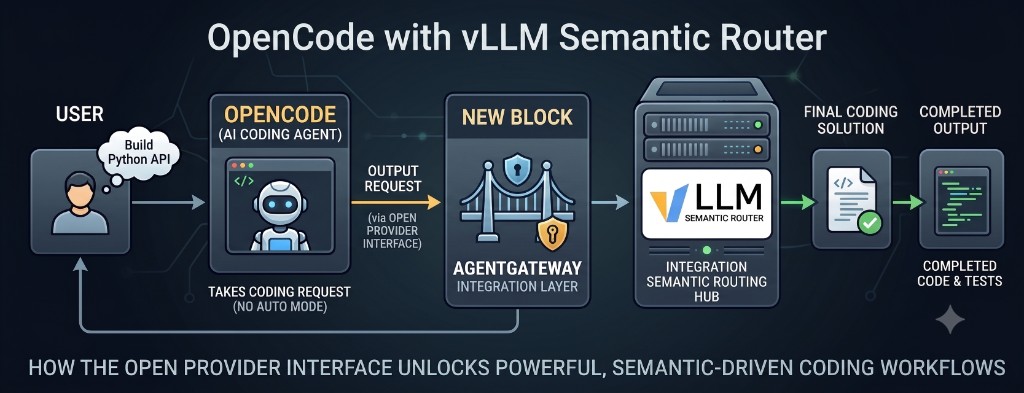
OpenCode with vLLM Semantic Router: open provider interface, AgentGateway integration layer, and semantic routing hub

The Feature Everyone Wants and Almost Nobody Has

Cursor's Auto mode is deceptively simple: the developer types, and the IDE chooses whether a prompt deserves a frontier model or something faster and cheaper. It is easy to stop noticing — until moving to an open tool where every request starts with a model dropdown.

Giving AgentGateway a Semantic Brain with vLLM Semantic Router

· 10 min read
Aayush Saini
SDE, Data and AI @ Red Hat
Anup Sharma
AI & Distributed System @ Nutanix

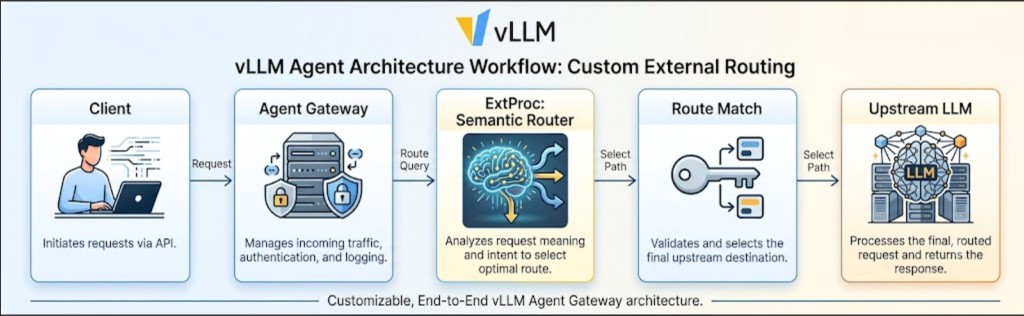
vLLM Agent Architecture Workflow: Custom Semantic Routing with AgentGateway and Semantic Router

Agent systems that span multiple models — a local endpoint for coding, a frontier cloud model for deep reasoning, and a fast general-purpose model for everyday tasks — all face the same routing question: how should each request be directed to the right backend?

Many deployments start with a lightweight Python proxy or keyword matcher in front of the gateway. That approach works at small scale, but misroutes grow quickly as traffic, languages, and task types diversify. This post shows how vLLM Semantic Router running as an Envoy ExtProc sidecar inside AgentGateway replaces that pattern with semantic, config-driven routing.

Agentic Routing on AMD ROCm

· 14 min read
Xunzhuo Liu
Intelligent Routing @vLLM
Haichen Zhang
Sr. AI Engineer @AMD
Andy Luo
Sr. Director @AMD

Most agent systems start with a simple idea: call model: auto and let the inference layer pick the right model. That is useful, but it is not enough for long-running agents.

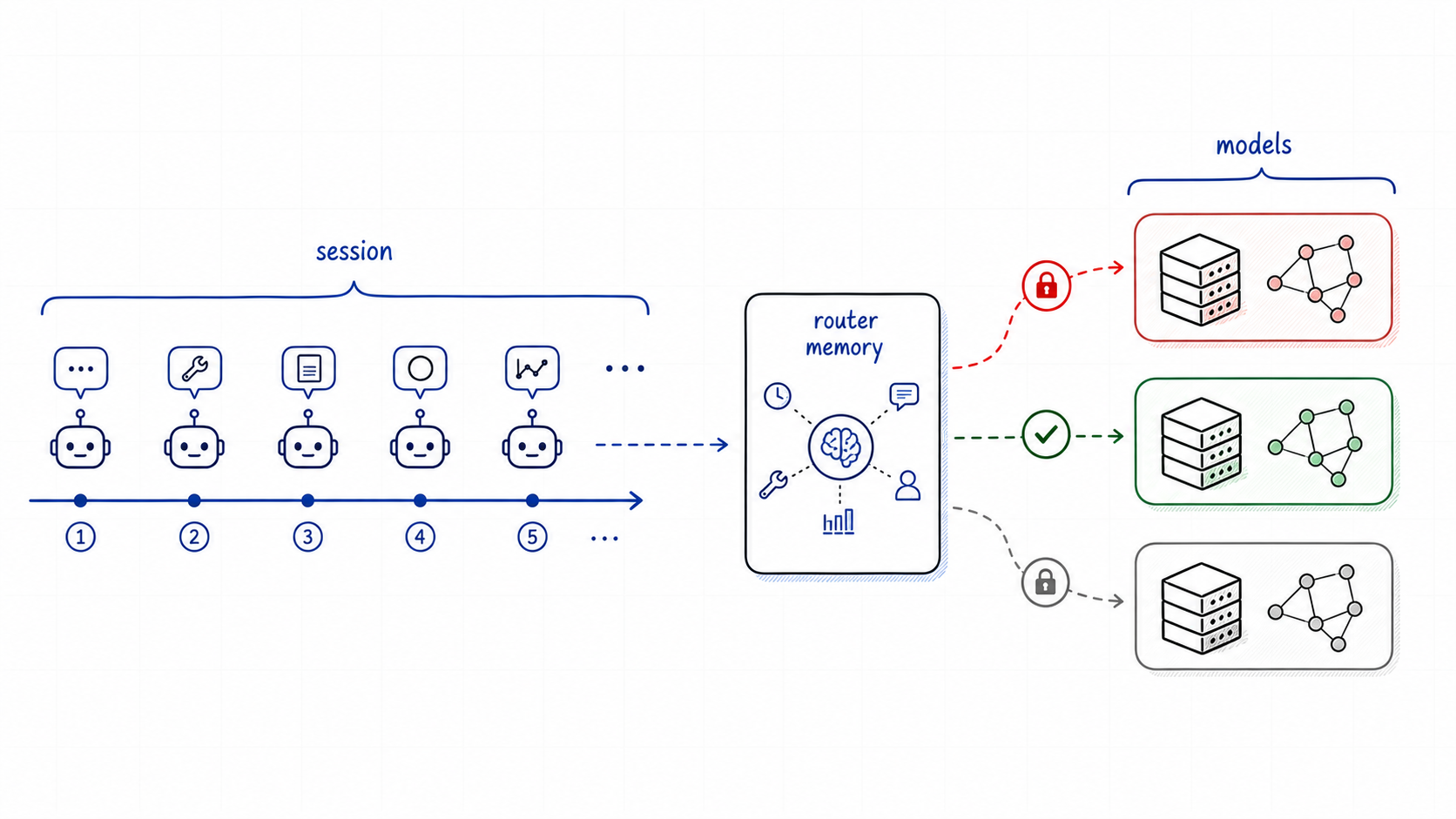
A coding agent can begin with architecture work, call tools, receive short tool outputs, continue with "fix that", then ask a privacy-sensitive question in the same user session. The latest message may look simple, but the route cannot be chosen from the latest message alone. The router also has to know whether this is a safe moment to switch models.

This guide shows how to deploy that pattern on AMD ROCm with vLLM Semantic Router. You will start one ROCm vLLM backend, serve the agentic routing recipe, open the dashboard, validate the OpenAI-compatible API, and use Inferoa to experience route decisions and Router Learning behavior from an agent client.

Agent session routed through router memory to model paths
Agentic routing is not only choosing a model. It is choosing when to keep one.

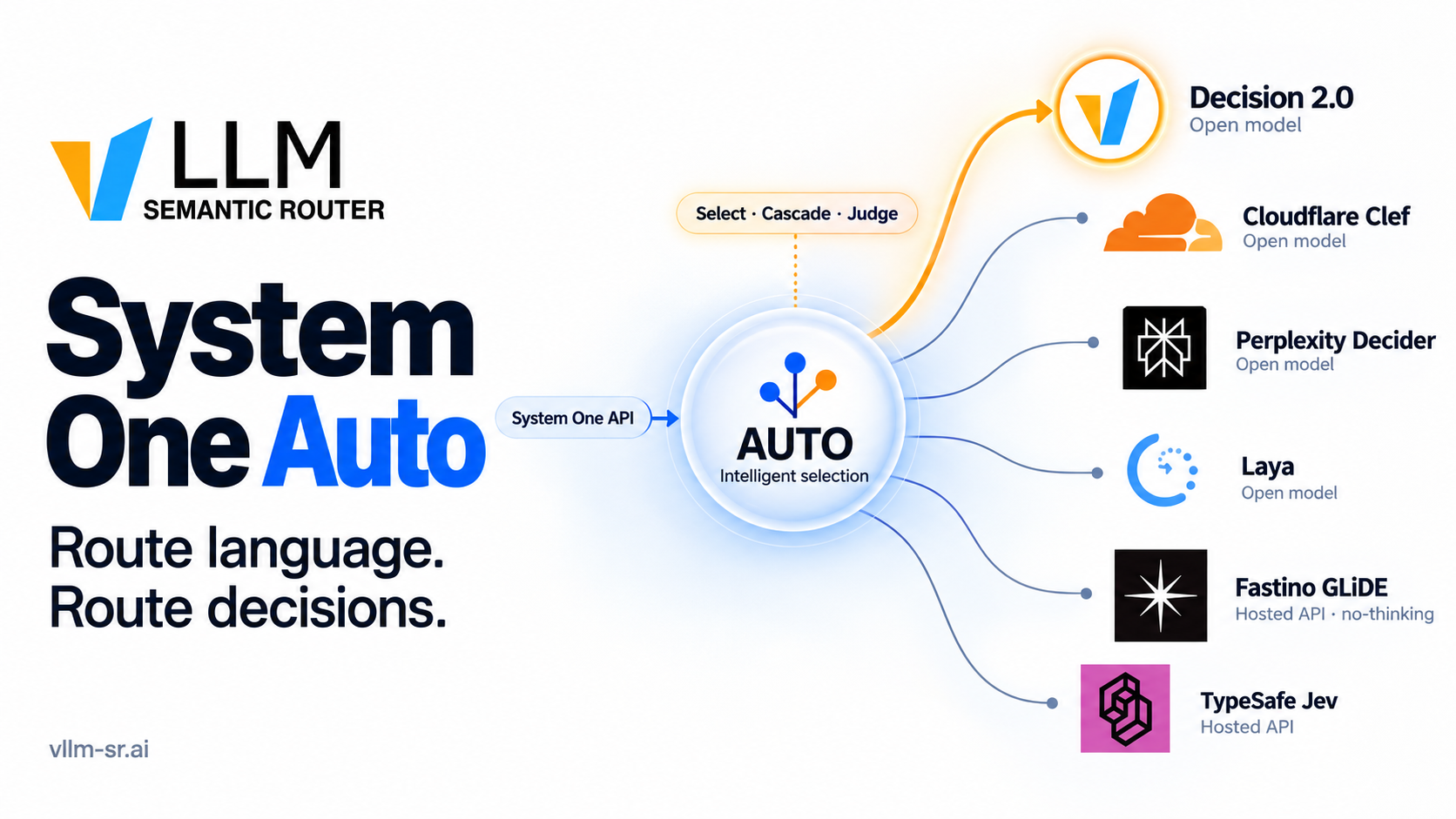
Signal-Decision Driven Architecture: Reshaping Semantic Routing at Scale

· One min read
Xunzhuo Liu
Intelligent Routing @vLLM

The earlier versions of vLLM Semantic Router relied on classification-based routing, a straightforward approach where user queries are classified into one of 14 MMLU domain categories, and then routed to corresponding models. While this worked for basic scenarios, we quickly discovered its limitations when building production AI systems for enterprises.

Synced from official vLLM Blog: Signal-Decision Driven Architecture: Reshaping Semantic Routing at Scale

banner